Microsoft patents method to pinpoint sound sources using 3D room models
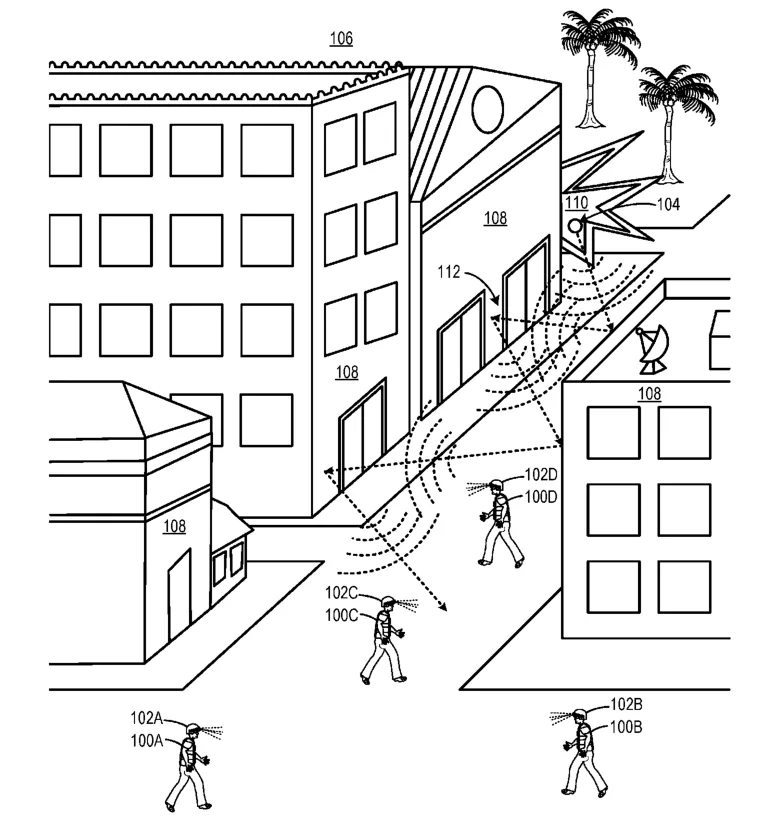
Microsoft describes a technique for determining where a sound comes from by combining microphone data with a digital map of the room. The system simulates how sound waves bounce off virtual walls and objects to calculate the exact starting point of the noise.
In the filing’s own words
A method for estimating an origin of an audio impulse in a real-world environment performed by computing system is disclosed. Audio signals are received from a microphone array. The audio signals characterize an audio impulse generated in the real-world environment. Locations in the real-world environment of the plurality of microphones are received. A device related transfer function (DRTF) of the microphone array is recognized. A geometric computer model of the real-world environment is recognized. The geometric computer model includes virtual structures that model real-world structures in the real-world environment. The virtual structures include virtual surfaces that are assigned acoustic parameters. An impulse response path of the audio impulse throughout the geometric computer model of the real-world environment is simulated. Simulation data including an estimated origin of the audio impulse in the real-world environment is output based at least on the simulated impulse response path of the audio impulse.
What exactly they claim (claim 1)
1. A method for estimating an origin of an audio impulse in a real-world environment performed by computing system, the method comprising: receiving audio signals from a microphone array including a plurality of microphones, wherein the audio signals characterize the audio impulse generated in the real-world environment; receiving locations in the real-world environment of the plurality of microphones in the microphone array; simulating, via a geometric computer model of the real-world environment including virtual structures that model real-world structures in the real-world environment, an impulse response path of the audio impulse throughout the geometric computer model of the real-world environment based at least on the audio signals, the locations in the real-world environment of the plurality of microphones in the microphone array, and a device related transfer function (DRTF) of the microphone array, wherein the impulse response path of the audio impulse is affected by interactions with at least some of the virtual structures that model the real-world structures in the real-world environment; and outputting simulation data including an estimated origin of the audio impulse in the real-world environment based at least on the simulated impulse response path of the audio impulse.
Facts
- Company
- Microsoft (Microsoft Technology Licensing, LLC)
- Official title
- AUDIO IMPULSE ORIGIN AND RESPONSE PATH SIMULATION
- Publication number
- US20260362081A1
- Application number
- 19747371
- Filed
- Jul 20, 2026
- Published
- Nov 12, 2026
- Inventors
- 1
- Claims
- 20
Classified under
H04S 7/40 Electricity & electronicsG06T 7/55 Physics & computingG06T 2207/20081 Physics & computingH04S 2420/01 Electricity & electronicsMore from Microsoft in Audio & voice
- Microsoft patents AI model that cleans up video calls by removing echoes and background voices Oct 1, 2026
- Microsoft patents system to grade how well audio fills in missing data Sep 29, 2026
- Microsoft patents audio effect that turns group speech into background chatter Sep 29, 2026
- Microsoft patents audio tool that adjusts sound based on hearing tests Sep 29, 2026
- Microsoft patents system to count unique callers on shared phone lines Nov 10, 2026
Summaries are simplified from the filing’s own abstract and first claim. A patent filing is not a product announcement.
Patent data and drawings: U.S. Patent and Trademark Office (USPTO). Nebula is not affiliated with or endorsed by the USPTO.