Google patents smarter diffusion models that use less computing power
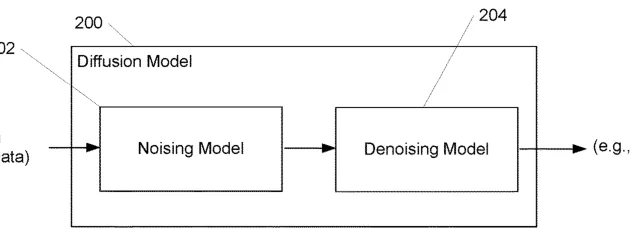
This patent describes a method for improving diffusion models, which are AI systems used to generate images or other data. It introduces specific techniques, such as learned noise schedules and Fourier features, to help the model reconstruct data more accurately while using fewer computational resources.
In the filing’s own words
A computer-implemented method for use of a diffusion model having improved accuracy comprises obtaining input data, the input data comprising one or more channels; providing the input data to a machine-learned diffusion model, the machine-learned diffusion model comprising: a noising model comprising a plurality of noising stages, the noising model configured to introduce noise to receive the input data and produce intermediate data in response to receipt of the input data; and a denoising model configured to reconstruct output data from the intermediate data; and receiving, by the computing system, the output data from the machine-learned diffusion model. The diffusion model can include a learned noise schedule. Additionally and/or alternatively, input to the denoising model can include a set of Fourier features. Additionally and/or alternatively, the diffusion model can be trained based at least in part on a continuous-time loss for an evidence lower bound.
What exactly they claim (claim 1)
1. A computing system that leverages Fourier features for improved fine scale prediction, comprising: one or more processors; and one or more non-transitory, computer-readable media that collectively store: at least a denoising model of a machine-learned diffusion model, the diffusion model comprising: a noising model comprising a plurality of noising stages, the noising model configured to receive input data and produce latent data according to a noise schedule in response to receipt of the input data, wherein the noise schedule is a learned noise schedule that comprises one or more learned parameter values; and the denoising model configured to reconstruct output data from the latent data; wherein input to the denoising model comprises a set of Fourier features comprising a linear projection of channels of at least one stage of the plurality of noising stages; and instructions that, when executed by the one or more processors, cause the computing system to execute the denoising model to process the latent data to generate the output data; and wherein the latent data comprises a compressed representation of the input data and the output data comprises a decompressed representation of the input data.
Facts
- Company
- Google (Google LLC)
- Official title
- Diffusion models having improved accuracy and reduced consumption of computational resources
- Patent number
- US12801896B2
- Application number
- 18012195
- Filed
- Jun 13, 2022
- Granted
- Nov 17, 2026
- Inventors
- 2
- Claims
- 22
Classified under
G06N 3/0455 Physics & computingG06N 3/047 Physics & computingG06N 3/0475 Physics & computingMore from Google in AI & software
- Google patents video search that answers questions using AI descriptions Sep 15, 2026
- Google patents photo tool that removes people and their gear Sep 15, 2026
- Google patents AI that writes live meeting notes and summaries Sep 15, 2026
- Google patents method for LLMs to self-correct and learn from mistakes Oct 27, 2026
- Google patents search results that mix real clips with AI-made video Nov 10, 2026
Summaries are simplified from the filing’s own abstract and first claim. A patent filing is not a product announcement.
Patent data and drawings: U.S. Patent and Trademark Office (USPTO). Nebula is not affiliated with or endorsed by the USPTO.