Sony patents method to verify physical items for metaverse use
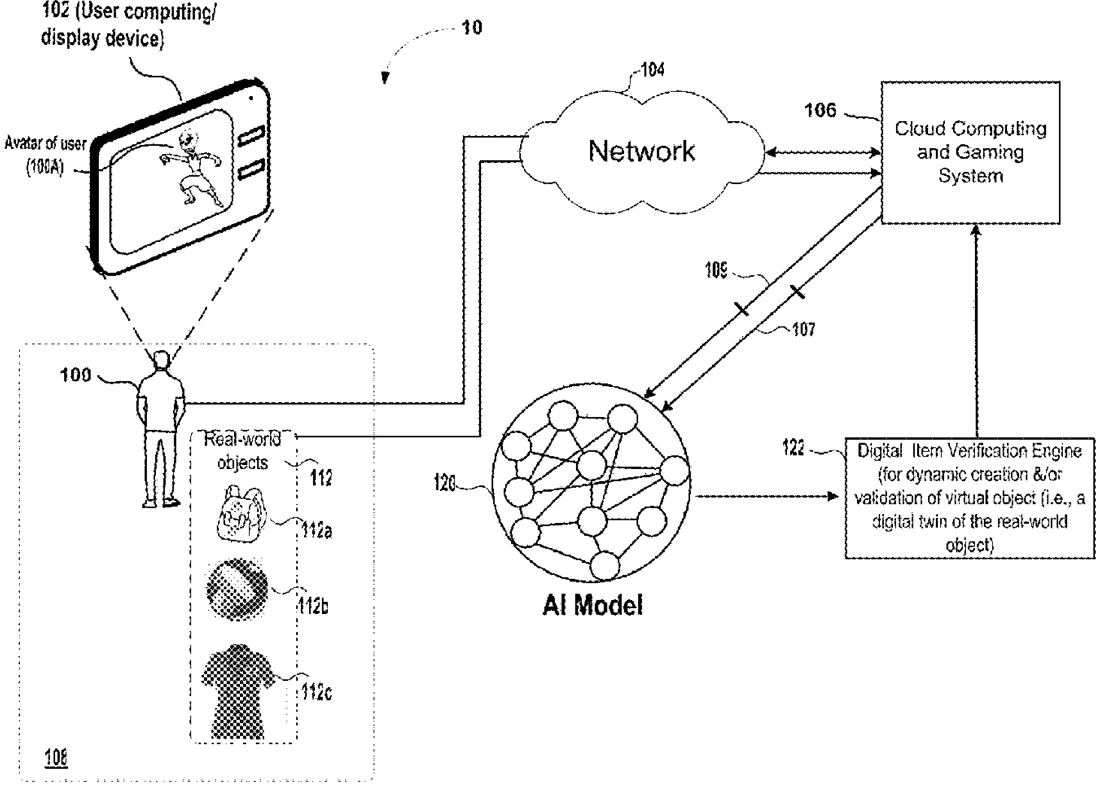
Sony has been granted a patent for a system that verifies a physical object is authentic before allowing its digital copy to be used in a metaverse. The process uses cameras and machine learning to scan the item's unique physical flaws, such as scratches or wear, to create a distinct fingerprint. If the scan matches the digital record, the virtual version is unlocked for the user.
In the filing’s own words
Methods and systems for providing access to a digital twin of a real-world object for use in a metaverse system includes receiving a request to validate the real-world object. The real-world object is validated using a plurality of physical attributes of the real-world object. Upon successful validation, the digital twin is unlocked so as to allow usage of the digital twin in the metaverse system.
What exactly they claim (claim 1)
1. A method, comprising: receiving, from a device of a user, a request to validate a real-world object that has a plurality of physical attributes defining a distinct fingerprint; capturing, using a plurality of sensors including at least one image capturing device, sensor data representing the plurality of physical attributes of the real-world object; validating the real-world object using the distinct fingerprint, the validating includes verifying ownership of the real-world object by at least: analyzing the sensor data in a multi-step process, wherein the analyzing comprises: processing the sensor data with a machine learning algorithm to identify specific physical imperfections within the plurality of physical attributes, the identified physical imperfections corresponding to unique visual data in the sensor data; determining, based on the identified physical imperfections, a margin of error for validating the real-world object, wherein the margin of error is dynamically influenced by one or more distinct characteristics of the real-world object; normalizing the sensor data by filtering out, using the machine learning algorithm, anomalous data corresponding to wear, damage, or user-specific markings to produce an attribute set; calculating, with the machine learning algorithm, statistical odds of two real-world objects having the same identified physical imperfections to confirm the real-world object is a unique instance; comparing the plurality of physical attributes with virtual attributes of a virtual object representing a digital twin to determine a match score; declaring, upon the match score being within a pre-defined threshold, the virtual object to be a match of the real-world object in possession of the user, wherein the match score being within the pre-defined threshold triggers a device notification to the user regarding the match score; unlocking the digital twin of the real-world object for use by the user in a metaverse system, upon successfully validating the real-world object, wherein the digital twin is represented by the virtual object with virtual attributes replicating the plurality of physical attributes of the real-world object, wherein the unlocking comprises associating the virtual object with the user for use in the metaverse system; and controlling, based on the unlocking, a presentation of the virtual object on a display, wherein operations of the method are implemented by a dedicated object recognition module within a secure processor a computing system, wherein the computing system dynamically adjusts computational resources based on a complexity of the sensor data, thereby reducing latency.
Facts
- Company
- Sony (Sony Interactive Entertainment Inc.)
- Official title
- Validating a real-world object's digital twin
- Patent number
- US12754978B2
- Application number
- 17866414
- Filed
- Jul 15, 2022
- Granted
- Oct 6, 2026
- Inventors
- 1
- Claims
- 20
Classified under
G06F 21/1015 Physics & computingG06Q 30/018 Physics & computingG06T 17/00 Physics & computingH04L 9/50 Electricity & electronicsMore from Sony in AI & software
- Sony patents AI that plays video games in your style Oct 6, 2026
- Sony patents AI that swaps game visuals for accessibility formats Sep 17, 2026
- Sony patents AI that changes game characters based on your play Oct 1, 2026
- Sony patents method to turn 2D videos into high-detail 3D animations Oct 15, 2026
- Sony patents AI bots that mimic your friends' gaming styles Sep 8, 2026
Summaries are simplified from the filing’s own abstract and first claim. A patent filing is not a product announcement.
Patent data and drawings: U.S. Patent and Trademark Office (USPTO). Nebula is not affiliated with or endorsed by the USPTO.