Nike patents wearable that measures muscle energy stores with light
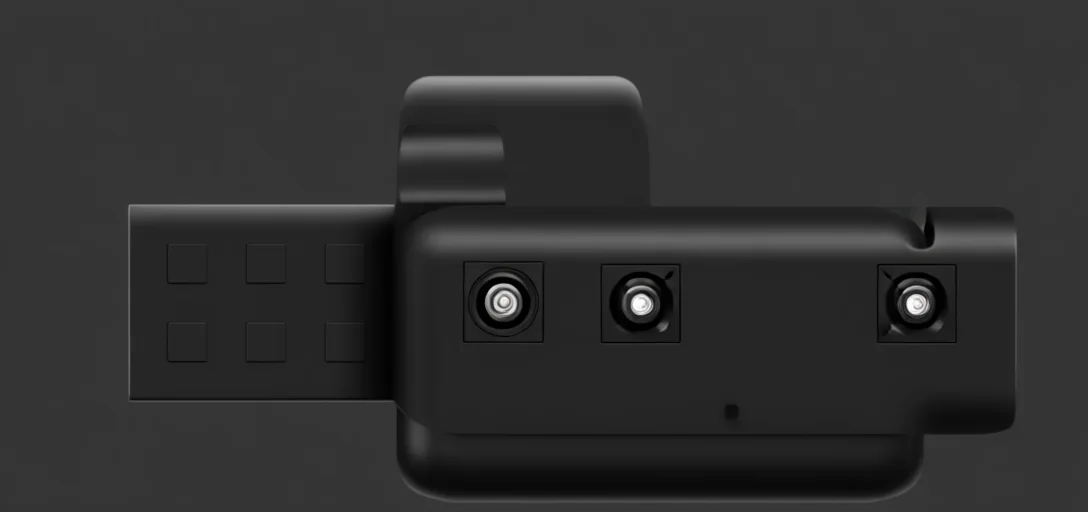
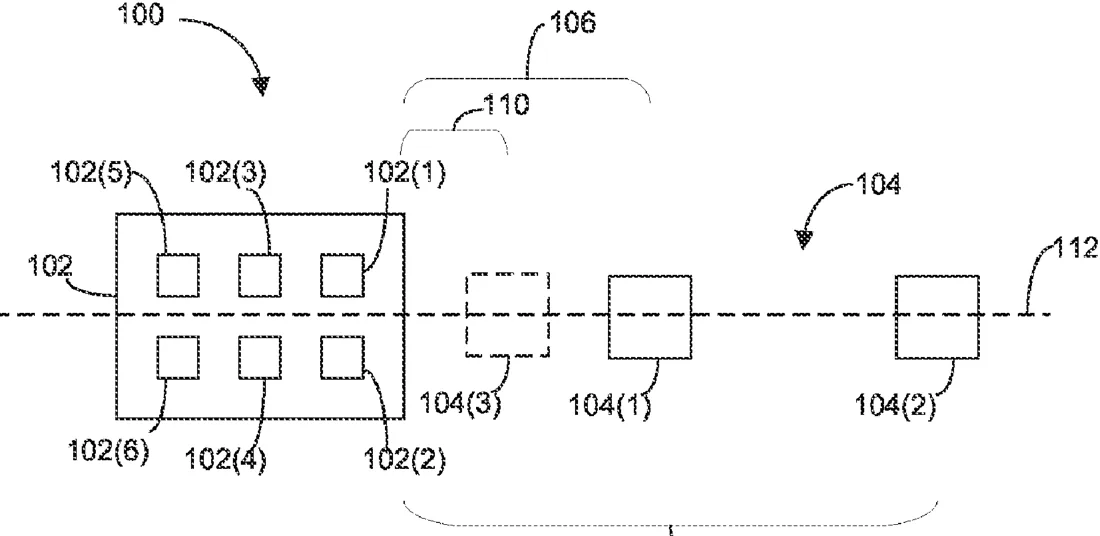
Nike has patented a wearable system that uses near-infrared light to estimate how much glycogen (stored energy) is in your muscles. It works by shining two specific wavelengths of light into the skin and comparing how much light bounces back from different depths to calculate muscle hydration and energy levels.
In the filing’s own words
A system, wearable device, and method include a light emitter configured to emit light at a first wavelength of between approximately 900 and 1000 nanometers and at a second wavelength of approximately 1350 nanometers, a first light detector spaced at a first distance from the light emitter, and a second light detector spaced at a second distance from the light emitter, the second distance approximately twice the first distance. At least one of hydration and glycogen of muscle tissue is determinable based on a relationship between backscatter light from the muscle tissue as detected by the second light detector and backscatter light from non-muscle tissue as detected by the first light detector.
What exactly they claim (claim 1)
1. A system, comprising: a light emitter configured to emit light at a first wavelength over a range of approximately 900 to 1000 nanometers and at a second wavelength over a range of approximately 1300 to 1400 nanometers; a first light detector spaced at a first distance from the light emitter; a second light detector spaced at a second distance from the light emitter, the second distance approximately twice the first distance; and a processor configured to determine a glycogen level of muscle tissue as a function of hydration of the muscle tissue, wherein the first wavelength is selected to correspond to a water absorption peak in the muscle tissue and the second wavelength is selected to have a higher water absorption coefficient in the muscle tissue than the first wavelength such that differential backscatter light detected at the first and second wavelengths reflects differential absorption by water in the muscle tissue as a function of glycogen-bound water content, the processor determining the glycogen level based on: determining a first ratio based on a differential relationship between backscatter light as detected by the first and second light detectors at the first wavelength; determining a second ratio based on a differential relationship between backscatter light as detected by the first and second light detectors at the second wavelength; and comparing the first and second ratios to look-up table ratios to identify a closest one of the look-up table ratios to the first and second ratios as determined, each look-up table ratio corresponding to a predetermined glycogen level, the predetermined glycogen level of the closest one of the look-up table ratios being the glycogen level of the muscle tissue.
Facts
- Company
- Nike (NIKE, Inc.)
- Official title
- Near-infrared spectroscopy for sensing glycogen in muscle tissue
- Patent number
- US12805728B1
- Application number
- 17502580
- Filed
- Oct 15, 2021
- Granted
- Nov 24, 2026
- Inventors
- 3
- Claims
- 26
Classified under
A61B 5/0075 Human necessitiesA61B 5/14532 Human necessitiesA61B 5/14546 Human necessitiesA61B 5/1455 Human necessitiesA61B 5/443 Human necessitiesA61B 5/4519 Human necessitiesMore from Nike in Health & body
- Nike patents ultrasound tech to suggest shoes based on muscle stiffness Sep 22, 2026
- Nike patents app that suggests workouts based on friends and schedule Sep 15, 2026
- Nike patents workout recaps that turn your run into a video Nov 3, 2026
- Nike patents system to overlay live stats on athlete video feeds Nov 10, 2026
- Nike patents fitness system that ranks users by exercise efficiency Nov 24, 2026
Summaries are simplified from the filing’s own abstract and first claim. A patent filing is not a product announcement.
Patent data and drawings: U.S. Patent and Trademark Office (USPTO). Nebula is not affiliated with or endorsed by the USPTO.