Amazon patents robot coordination using machine learning
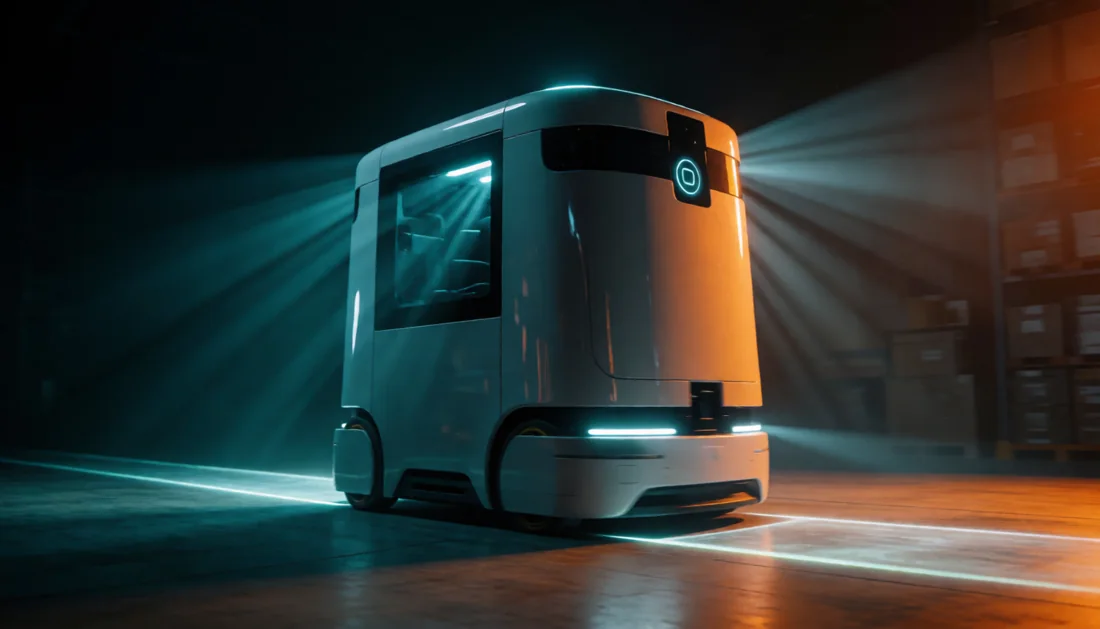
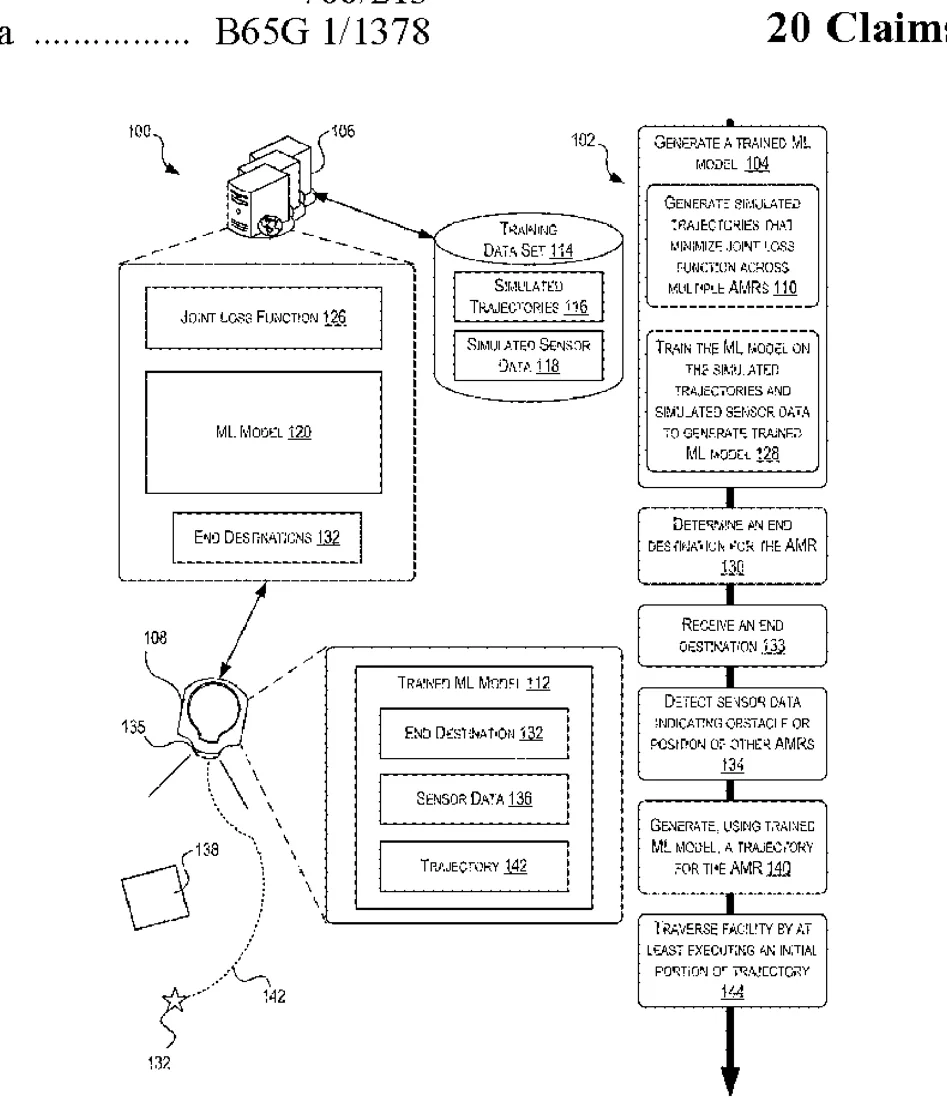
Amazon describes a system where warehouse robots use a machine learning model to plan their own paths. The model is trained on simulated scenarios to help multiple robots move together without colliding, using sensor data to adjust their routes in real time.
In the filing’s own words
Techniques described herein relate to learned implicit coordination of autonomous mobile robots (AMRs) using machine learning. For example, an AMR can detect, by a sensor of the AMR, sensor data indicating a state of an environment around the AMR. The AMR can generate, by at least using a trained machine learning model and based at least in part on the sensor data and a goal for the AMR, a trajectory for achieving the goal. The trained machine learning model can be generated by at least training a machine learning model on simulated trajectories for a set of AMRs that minimize a joint loss function across the set of AMRs. The AMR can execute at least an initial portion of the trajectory.
What exactly they claim (claim 1)
1. A system, comprising: a computer system configured to at least: determine end destinations for individual autonomous mobile robots (AMRs) traversing a facility; and generate a trained machine learning model by at least: generating, based at least in part on simulated sensor data for a set of AMRs, a set of simulated trajectories for individual AMRs of the set of AMRs that minimize a joint loss function across the set of AMRs, wherein the joint loss function comprises at least one of a penalty for angular deviation from an end destination or a maximum velocity within a predefined distance from the end destination; and training the machine learning model on the set of simulated trajectories and the simulated sensor data; and an AMR operably coupled to the computer system and comprising a sensor, the AMR configured to: receive an end destination for the AMR, in the facility from the computer system; detect, by the sensor, sensor data indicating a position of at least one of an obstacle or one or more other AMRs in the facility; generate, by at least using the trained machine learning model and based at least in part on the sensor data and the end destination, a trajectory for the AMR; and traverse the facility by at least executing an initial portion of the trajectory.
Facts
- Company
- Amazon (Amazon Technologies, Inc.)
- Official title
- Learned implicit coordination of autonomous mobile robots using machine learning
- Patent number
- US12792058B1
- Application number
- 18979305
- Filed
- Dec 12, 2024
- Granted
- Nov 10, 2026
- Inventors
- 2
- Claims
- 20
Classified under
G05D 1/646 Physics & computingG05D 1/622 Physics & computingG05D 1/693 Physics & computingG05D 2101/15 Physics & computingG05D 2111/17 Physics & computingMore from Amazon in Robots & automation
- Amazon patents software that designs custom robots for specific tasks Sep 8, 2026
- Amazon patents robots that move items to custom box makers Sep 8, 2026
- Amazon patents robots to move boxes between warehouse floors Sep 8, 2026
- Amazon patents robot arm that adjusts grip if objects swing Sep 15, 2026
- Amazon patents robot system to slide storage pods for item retrieval Sep 15, 2026
Summaries are simplified from the filing’s own abstract and first claim. A patent filing is not a product announcement.
Patent data and drawings: U.S. Patent and Trademark Office (USPTO). Nebula is not affiliated with or endorsed by the USPTO.