Microsoft patents method to automatically break down complex AI tasks
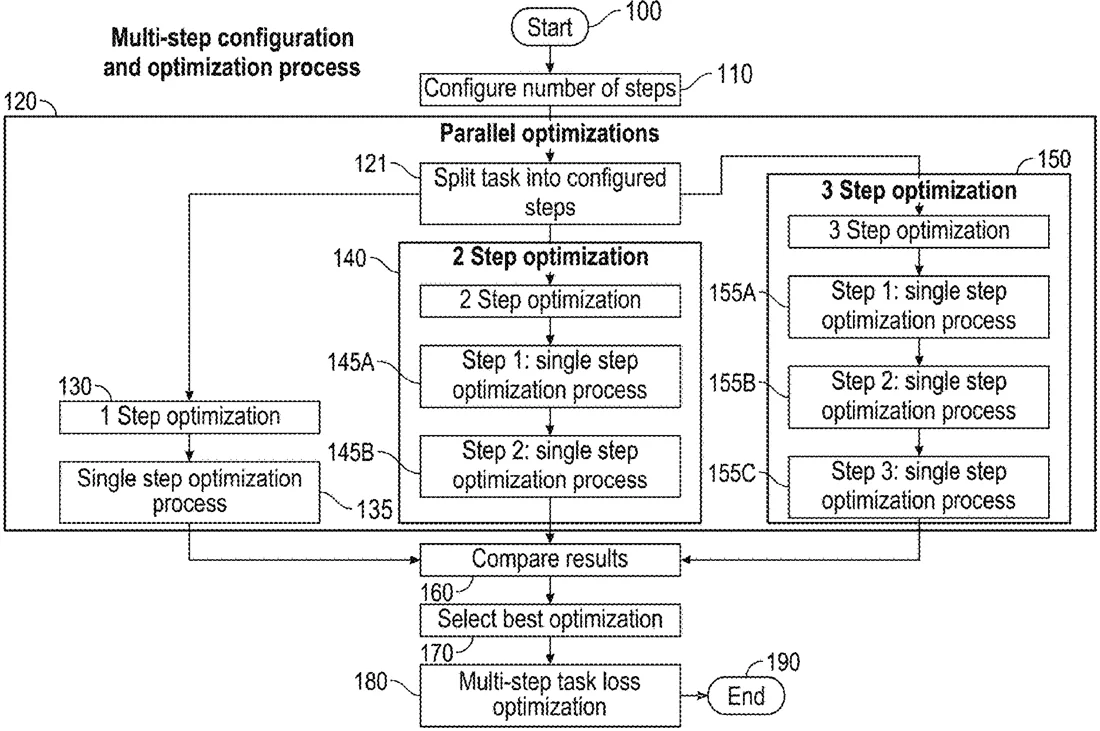
Microsoft describes a system that takes a complex instruction for a large language model and splits it into smaller, manageable steps. The system tests different ways of breaking down the task, predicts which approach will work best, and then uses the most efficient combination to generate a final answer.
In the filing’s own words
Techniques and systems are disclosed to perform language model prompt optimization for complex task resolution, such as for natural language prompts used with large language models (LLMs). An example method includes: forming different combinations of subtasks that accomplish some overall task; generating corresponding combinations of subprompts; producing a performance prediction of combinations of subprompts to accomplish the overall task using the language model; evaluating the performance predictions against a threshold performance condition; selecting a combination for performing the overall task that meets the threshold performance condition; executing the subprompts corresponding to the selected combination of subtasks using the language model to accomplish the overall task; and outputting a response based on a result of the executing of the subprompts.
What exactly they claim (claim 1)
1. A method for automated language model prompt optimization, comprising: receiving a base prompt for an overall task to be performed with a language model; based on the base prompt, deriving task instructions for the language model to perform the overall task; based on the task instructions, forming multiple different combinations of subtasks, wherein each of the different combinations of subtasks provides a different number of subtasks that, if performed collectively, accomplish the overall task; for each of the different combinations of subtasks, generating a corresponding combination of subprompts that, if performed by the language model, collectively accomplish that combination of subtasks; for each of the different combinations of subtasks, producing a performance prediction of that combination to accomplish the overall task using the language model, according to the corresponding combination of the subprompts; evaluating the performance prediction of each of the different combinations of subtasks against a threshold performance condition; selecting one combination from the different combinations of subtasks for performing the overall task, wherein the selected combination has a performance prediction meeting the threshold performance condition, and has a lowest number of subtasks among all combinations having respective performance predictions meeting the threshold performance condition; executing the subprompts corresponding to the selected combination of subtasks using the language model and data associated with the base prompt, to accomplish the overall task; and outputting a response to the base prompt based on a result of the executing of the subprompts.
Facts
- Company
- Microsoft (Microsoft Technology Licensing, LLC)
- Official title
- UNSUPERVISED LANGUAGE MODEL PROMPT OPTIMIZATION FOR COMPLEX TASK RESOLUTION
- Publication number
- US20260320403A1
- Application number
- 19220956
- Filed
- May 28, 2025
- Published
- Oct 15, 2026
- Inventors
- 8
- Claims
- 20
Classified under
G06N 3/092 Physics & computingG06N 3/0475 Physics & computingMore from Microsoft in AI & software
- Microsoft patents method to check AI answers against verified facts Oct 20, 2026
- Microsoft patents AI that presents PowerPoint slides for you Sep 3, 2026
- Microsoft patents method to check if LLM answers are based on real data Sep 10, 2026
- Microsoft patents system to blend multiple AI agents into one chat Oct 1, 2026
- Microsoft patents system that answers questions using your screen history Oct 15, 2026
Summaries are simplified from the filing’s own abstract and first claim. A patent filing is not a product announcement.
Patent data and drawings: U.S. Patent and Trademark Office (USPTO). Nebula is not affiliated with or endorsed by the USPTO.