Samsung patents cadmium-free nanoparticles for brighter displays
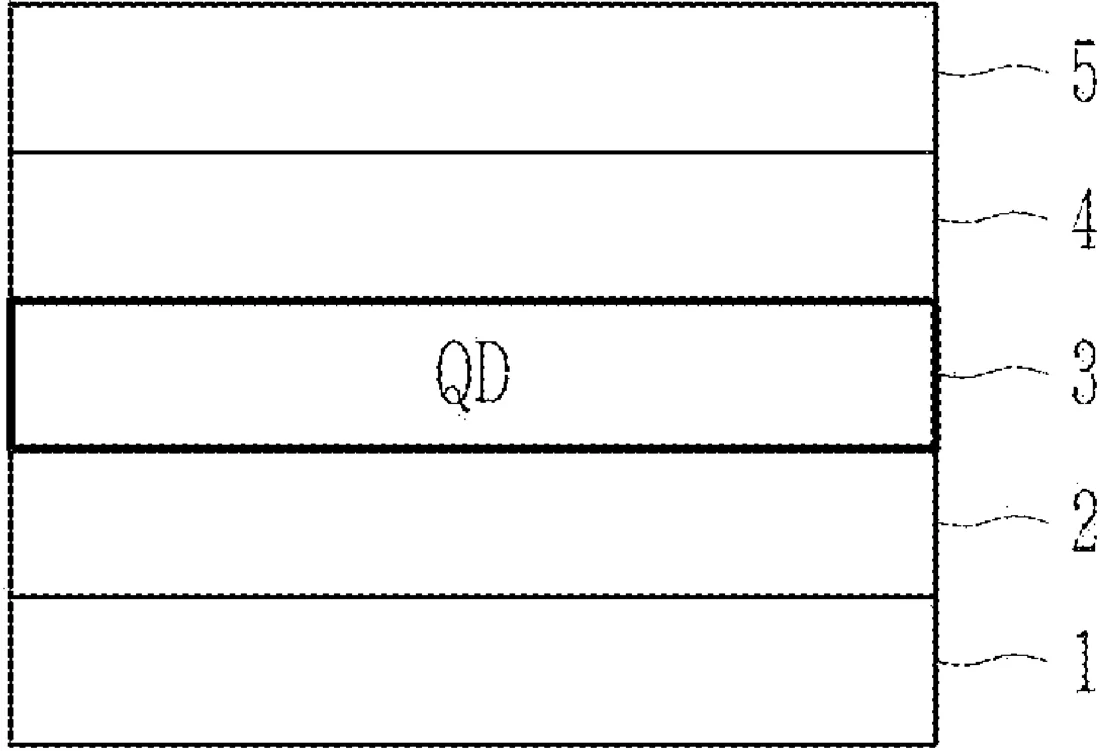
Samsung describes a type of tiny semiconductor particle made from zinc, sulfur, and selenium that does not contain the toxic metal cadmium. The particle has a core and a shell structure, with specific organic molecules attached to its surface to help it function in electronic devices. These particles are designed to be used in electroluminescent devices, which are the components that create light in modern screens.
In the filing’s own words
A semiconductor nanoparticle, a method of preparing a semiconductor nanoparticle, and an electroluminescent device including the semiconductor nanoparticle. The semiconductor nanoparticle includes zinc, sulfur, and selenium, the semiconductor nanoparticle includes a first semiconductor nanocrystal, and a semiconductor nanocrystal shell including zinc and sulfur, the semiconductor nanocrystal shell disposed on the first semiconductor nanocrystal, and the semiconductor nanoparticle further includes a plurality of organic ligands. The plurality of organic ligands include a first organic ligand having a carbon number of less than or equal to 13; and a second organic ligand having a carbon number of greater than or equal to 15 wherein the second organic ligand comprises two or more carbon-carbon double bonds and is different than the first organic ligand.
What exactly they claim (claim 1)
1. A semiconductor nanoparticle comprising: zinc, sulfur, and selenium, wherein the semiconductor nanoparticle comprises a first semiconductor nanocrystal, and a semiconductor nanocrystal shell including zinc and sulfur, the semiconductor nanocrystal shell disposed on the first semiconductor nanocrystal, the semiconductor nanoparticle does not comprise cadmium, the semiconductor nanoparticle includes a plurality of organic ligands, and the plurality of organic ligands comprise: a first organic ligand having a carbon number of less than or equal to 13; and a second organic ligand having a carbon number of greater than or equal to 15, wherein the second organic ligand comprises two or more carbon-carbon double bonds, and is different than the first organic ligand.
Facts
- Company
- Samsung (SAMSUNG ELECTRONICS CO., LTD.)
- Official title
- SEMICONDUCTOR NANOPARTICLE, PRODUCTION METHOD THEREOF, ELECTROLUMINESCENT DEVICE AND DISPLAY DEVICE INCLUDING THE SAME
- Publication number
- US20260305061A1
- Application number
- 19635187
- Filed
- Mar 31, 2026
- Published
- Oct 1, 2026
- Inventors
- 6
- Claims
- 20
Classified under
H10K 50/115 Electricity & electronicsC09K 11/025 Chemistry & metalsC09K 11/883 Chemistry & metalsH10K 85/381 Electricity & electronicsMore from Samsung in Chips & hardware
- Samsung patents chip that combines camera and screen Oct 13, 2026
- Samsung patents faster chip testing using machine learning Sep 1, 2026
- Samsung patents radar method to pinpoint target direction more accurately Sep 1, 2026
- Samsung patents memory chip that searches data by content, not address Sep 1, 2026
- Samsung patents chip design that skips empty data to speed up AI Sep 1, 2026
Summaries are simplified from the filing’s own abstract and first claim. A patent filing is not a product announcement.
Patent data and drawings: U.S. Patent and Trademark Office (USPTO). Nebula is not affiliated with or endorsed by the USPTO.