Samsung patents ring that calibrates sensors using user gestures
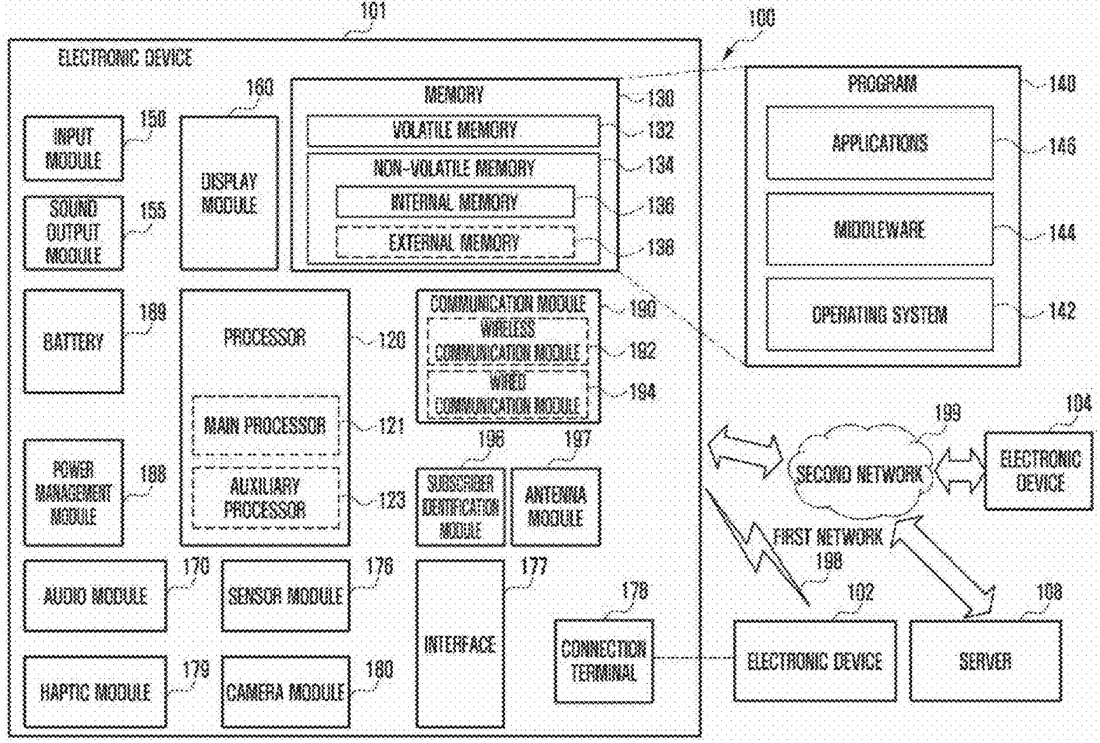
Samsung has filed a patent for a wearable electronic device, such as a smart ring, that uses a motion sensor to track movement. The device asks the user to perform a specific gesture to measure how the sensor reads gravity, then calculates a correction value to ensure accurate data when the device is worn.
In the filing’s own words
An electronic device capable of being worn on a finger includes a motion sensor configured to detect movement of the electronic device, a processor, and a memory configured to store instructions. The instructions may be configured to cause, when executed by the processor, the electronic device to generate a first message requesting a user to perform a specified first gesture, obtain, at least based on the generation of the first message, a first vector and a second vector indicating acceleration in a direction of gravity using data generated by the motion sensor, determine a first x-axis acceleration value in an x-axis direction, a first y-axis acceleration value in a y-axis direction, and a first z-axis acceleration value in a z-axis direction using the first vector and the second vector, and calculate a correction value to convert the first x-axis acceleration value, the first y-axis acceleration value, and the first z-axis acceleration value into a second x-axis acceleration value, a second y-axis acceleration value, and a second z-axis acceleration value measured when the electronic device is in a specified wearing state.
What exactly they claim (claim 1)
1. An electronic device capable of being worn on a finger, the electronic device comprising: a motion sensor configured to detect movement of the electronic device; a processor; and a memory configured to store instructions, wherein the instructions are configured to cause, when executed by the processor, the electronic device to: generate a first message requesting a user to perform a specified first gesture; obtain, at least based both on the generation of the first message and data generated by the motion sensor, a first vector and a second vector indicating acceleration in a direction of gravity using; determine a first x-axis acceleration value in an x-axis direction, a first y-axis acceleration value in a y-axis direction, and a first z-axis acceleration value in a z-axis direction using the first vector and the second vector; determine a correction value of converting the first x-axis acceleration value, the first y-axis acceleration value, and the first z-axis acceleration value into a second x-axis acceleration value, a second y-axis acceleration value, and a second z-axis acceleration value measured when the electronic device is in a specified wearing state; and based on the correction value, calibrate data acquired from the motion sensor.
Facts
- Company
- Samsung (Samsung Electronics Co., Ltd.)
- Official title
- WEARABLE ELECTRONIC DEVICE AND METHOD FOR DETERMINING STATE OF BEING WORN ON HUMAN BODY
- Publication number
- US20260325009A1
- Application number
- 19536965
- Filed
- Feb 11, 2026
- Published
- Oct 22, 2026
- Inventors
- 4
- Claims
- 20
Classified under
A61B 5/1116 Human necessitiesA61B 5/486 Human necessitiesA61B 5/6802 Human necessitiesA61B 2560/0223 Human necessitiesMore from Samsung in Wearables
- Samsung patents wearable that tracks brain waves to suggest health actions Oct 6, 2026
- Samsung patents wristwatch with flexible screen that wraps around your wrist Oct 15, 2026
- Samsung patents ring that projects a screen onto your skin Oct 22, 2026
- Samsung patents glasses with moving lenses to adjust focus Sep 1, 2026
- Samsung patents wearable that adjusts walking force while you test walk Sep 8, 2026
Summaries are simplified from the filing’s own abstract and first claim. A patent filing is not a product announcement.
Patent data and drawings: U.S. Patent and Trademark Office (USPTO). Nebula is not affiliated with or endorsed by the USPTO.