Google patents ad system that adjusts bids for new customers
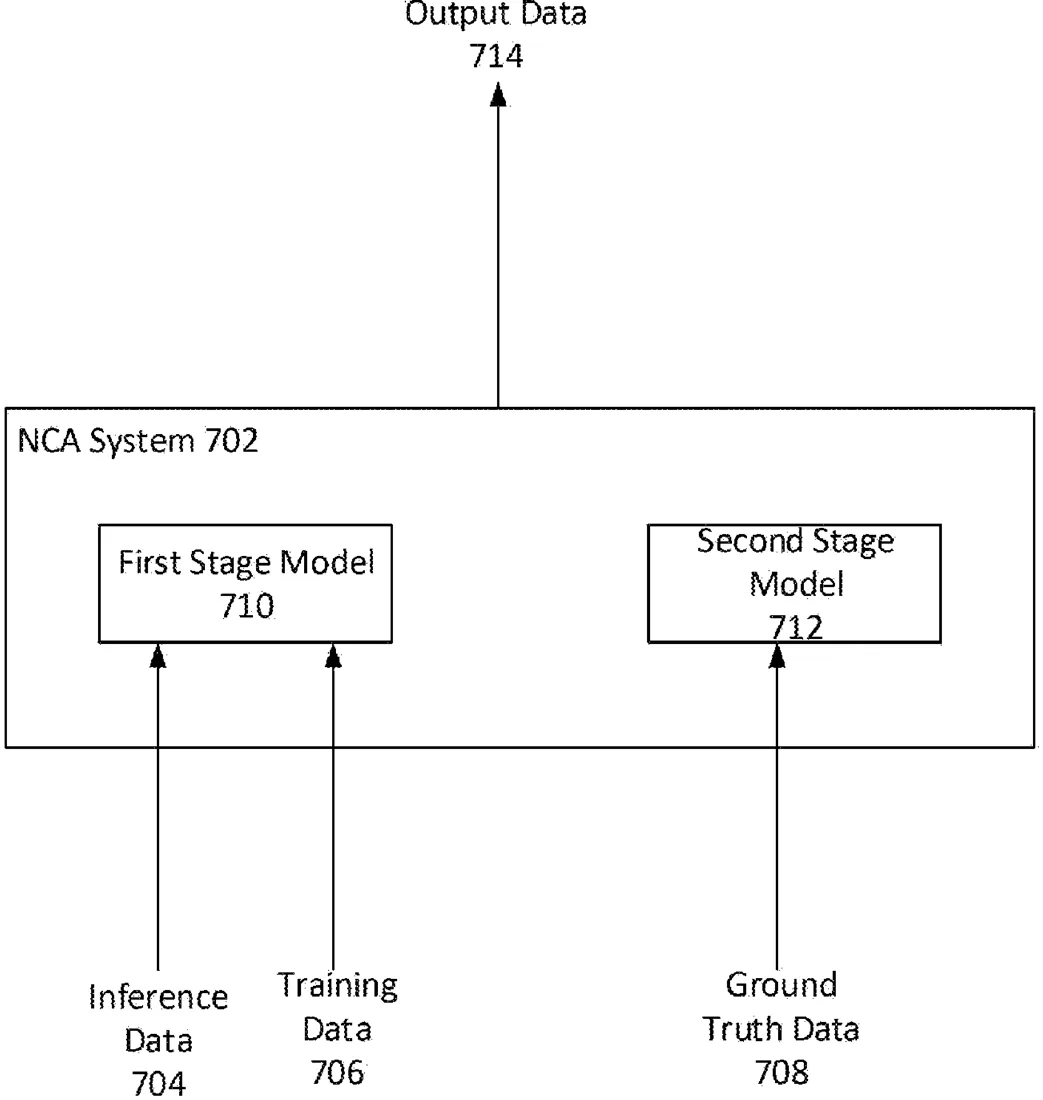
This filing describes a system that uses an AI model to guess if a person seeing an ad is a new customer for a specific store. If the model predicts the viewer is new, the system automatically changes the price the store pays for the ad or the value of the click.
In the filing’s own words
The technology is generally directed to determining whether a consumer being presented with a digital component is a disengaged and/or qualifying disengaged consumer at the time the digital component is being selected. An artificial intelligence model may be trained and used to predict whether the consumer is a disengaged and/or qualifying disengaged consumer. The prediction may be a probability representing the likelihood that the user is a disengaged and/or qualifying disengaged consumer for a given merchant. The probability may be used to dynamically adjust the merchant's bid at the time of auction to have the merchant's digital component selected. The probability may, in some examples, may be used to dynamically adjust the conversion values after the merchant's digital component is provided for output.
What exactly they claim (claim 1)
1. A method, comprising: receiving, by one or more processors, digital component campaign information comprising an initial conversion value, one or more additional conversion values, an initial bid value, one or more additional bid values, and ground truth data identifying one or more qualifying consumers; receiving, by the one or more processors, a request for a digital component; generating, by executing a first stage model of an artificial intelligence (AI) model trained using the ground truth data, one or more consumer embedding representations; generating, by executing a second stage model of the AI model trained using the ground truth data, one or more merchant embedding representations, wherein at least one of the first or second stage model is trained offline; providing, by the one or more processors, as input to the AI model the request for the digital component, the one or more consumer embedding representations, and the one or more merchant embedding representations; determining, by the one or more processors executing the AI model online, at least one of a new consumer probability or a new qualifying consumer probability, wherein: the new consumer probability corresponds to a probability a consumer to be presented the digital component is a new consumer, and the new qualifying consumer probability corresponds to a probability the consumer to be presented the digital component is a new qualifying consumer; and dynamically adjusting, by the one or more processors based on at least one of the one or more additional bid values or the one or more additional conversion values, and at least one of the new consumer probability or the new qualifying consumer probability, at least one of a resulting bid value or a resulting conversion value associated with the digital component.
Facts
- Company
- Google (Google LLC)
- Official title
- Dynamically Adjusting Digital Component Campaign Values For Disengaged Consumers
- Publication number
- US20260311218A1
- Application number
- 19709052
- Filed
- Jun 16, 2026
- Published
- Oct 8, 2026
- Inventors
- 11
- Claims
- 20
Classified under
G06Q 30/0275 Physics & computingG06Q 30/0201 Physics & computingG06Q 30/0243 Physics & computingMore from Google in AI & software
- Google patents video search that answers questions using AI descriptions Sep 15, 2026
- Google patents photo tool that removes people and their gear Sep 15, 2026
- Google patents AI that writes live meeting notes and summaries Sep 15, 2026
- Google patents AI tool that turns messy emergency notes into clear messages Sep 3, 2026
- Google patents AI that clicks through apps to finish tasks for you Sep 24, 2026
Summaries are simplified from the filing’s own abstract and first claim. A patent filing is not a product announcement.
Patent data and drawings: U.S. Patent and Trademark Office (USPTO). Nebula is not affiliated with or endorsed by the USPTO.