Samsung patents TV tech that blends AI models to improve image quality
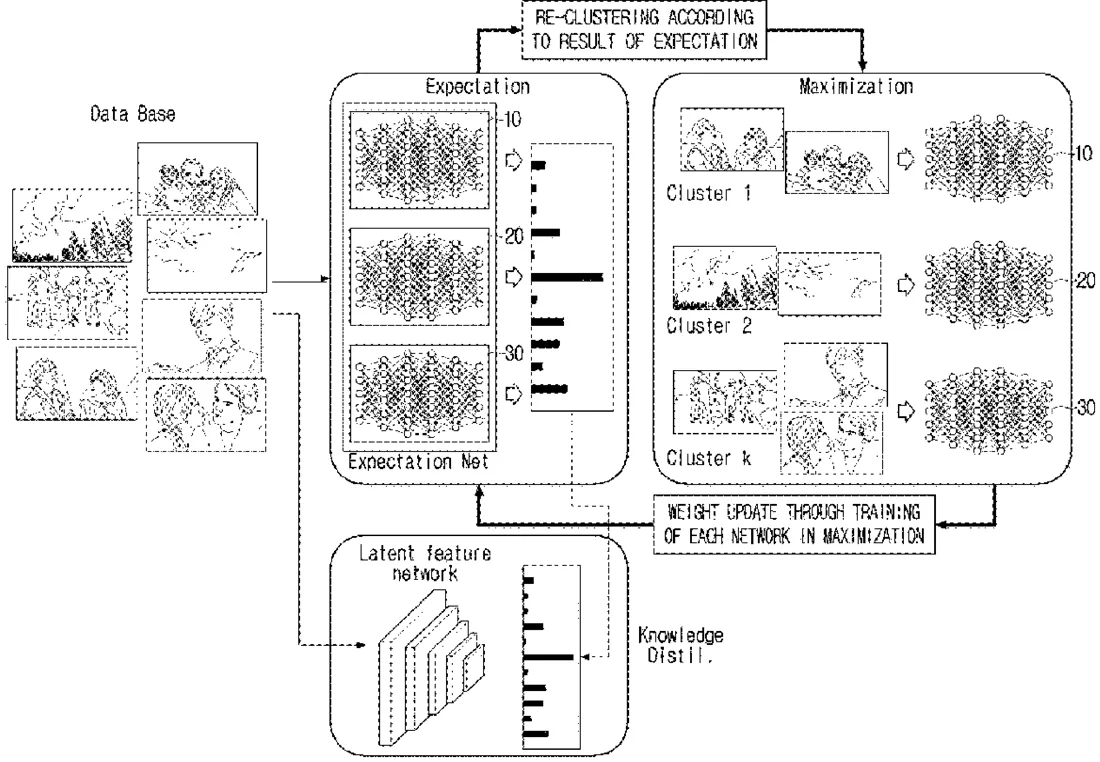
This patent describes a display system that uses a prediction model to determine how different types of images should be processed. Instead of picking just one enhancement tool, it blends multiple AI models based on the input image to create a single, adaptive model for better picture quality.
In the filing’s own words
A display apparatus, includes: a memory configured to store at least one instruction; and one or more processors configured to execute the at least one instruction to cause the display apparatus to: obtain weight value information for clusters classified according to picture quality by inputting an input image in a prediction neural network model; obtain an adaptive neural network model by respectively applying the weight value information to neural network models corresponding to the clusters; and obtain an output image with improved picture quality by inputting the input image in the adaptive neural network model, wherein the prediction neural network model is a model trained to output probability values for the clusters based on loss information for output images obtained by inputting learning images into the neural network models.
What exactly they claim (claim 1)
1. A display apparatus, comprising: a memory configured to store at least one instruction; and one or more processors configured to execute the at least one instruction to cause the display apparatus to: obtain weight value information including a plurality of probability values for a plurality of clusters classified according to picture quality by inputting an input image in a prediction neural network model; obtain an adaptive neural network model by respectively applying the weight value information as different weight values to a plurality of neural network models corresponding to the plurality of clusters such that the adaptive neural network model is generated by weighting the plurality of neural network models corresponding to the plurality of clusters rather than selecting only one neural network model from among the plurality of neural network models; and obtain an output image with improved picture quality by inputting the input image in the adaptive neural network model, wherein the prediction neural network model is a model trained to output a plurality of probability values for the plurality of clusters based on loss information for a plurality of output images obtained by inputting a plurality of learning images into the plurality of neural network models, the loss information being obtained by comparing a plurality of picture quality improved images corresponding to the plurality of learning images with the plurality of output images and wherein the plurality of learning images are classified into the plurality of clusters based on a loss value less than a threshold value from among a plurality of loss values included in the loss information without a subjective determination of a human.
Facts
- Company
- Samsung (SAMSUNG ELECTRONICS CO., LTD.)
- Official title
- Display apparatus and control method therefor
- Patent number
- US12762646B2
- Application number
- 18798199
- Filed
- Aug 8, 2024
- Granted
- Oct 13, 2026
- Inventors
- 2
- Claims
- 17
Classified under
G06T 3/4046 Physics & computingG06T 3/4053 Physics & computingG06T 7/0002 Physics & computingG06V 10/762 Physics & computingG06V 10/764 Physics & computingG06V 10/774 Physics & computingMore from Samsung in AI & software
- Samsung patents tool to erase objects from photos using AI Sep 24, 2026
- Samsung patents drawing objects into photos with AI Oct 15, 2026
- Samsung patents AI that creates personalized exercise videos Sep 10, 2026
- Samsung patents AI summaries for paused TV shows based on your viewing habits Sep 24, 2026
- Samsung patents turning chat conversations into image prompts Oct 1, 2026
Summaries are simplified from the filing’s own abstract and first claim. A patent filing is not a product announcement.
Patent data and drawings: U.S. Patent and Trademark Office (USPTO). Nebula is not affiliated with or endorsed by the USPTO.