Google patents voice navigation that adapts to your driving context
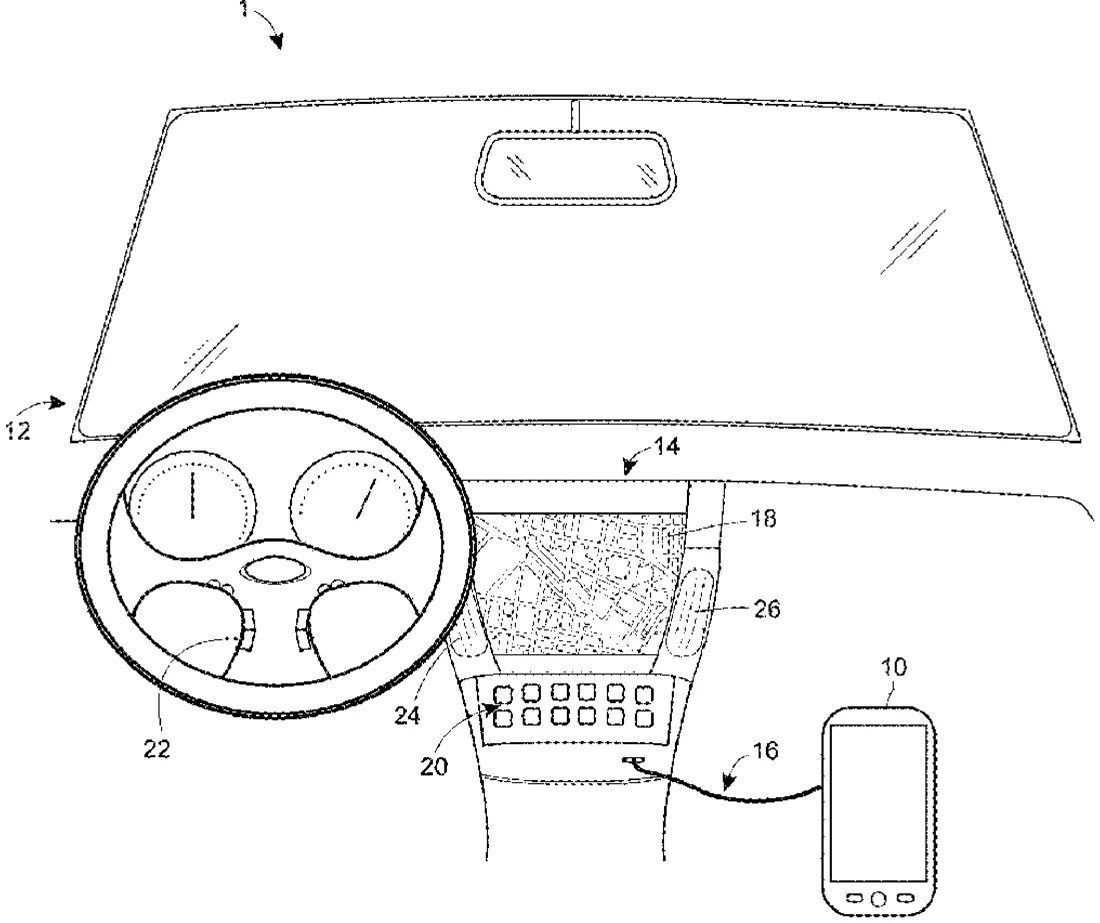
Google describes a system that uses machine learning to adjust how navigation voice instructions are delivered based on sensor data from the vehicle. The model learns from past interactions to determine the best timing and frequency for announcements, ensuring drivers receive directions when they are most likely to hear and understand them.
In the filing’s own words
To provide context-aware audio navigation instructions, a server device obtains sets of audio navigation instructions previously provided to users along with sensor data descriptive of a context in which the audio navigation instructions were provided and an indication of whether a driver correctly responded to the audio navigation instructions. The server device trains a machine learning model using this data, where the machine learning model identifies audio navigation instruction parameters for a particular context. In response to a request for navigation directions, the server device receives sensor data from the client computing device generating the request that is indicative of the environment surrounding the client computing device. The server device then applies the sensor data and navigation instructions to the machine learning model to generate a set of audio navigation instructions responsive to the request. The server device provides the set of audio navigation instructions to the client computing device.
What exactly they claim (claim 1)
1. A method for generating context-aware audio navigation instructions in a vehicle, the method comprising: training, by one or more processors, a machine learning model that automatically identifies, for a particular set of sensor signals in the vehicle, one or more audio navigation instruction parameters for presenting an audio navigation instruction using (i) a plurality of sensor signals in the vehicle, the sensor signals being descriptive of a context in which audio navigation instructions are provided, and (ii) an indication of whether a driver correctly responded to the audio navigation instructions; determining, by the one or more processors, a navigation instruction to be provided to the user; generating, by the one or more processors, an audio navigation instruction based on the determined navigation instruction, including: receiving one or more sensor signals, and applying the machine learning model to the determined navigation instruction and the received one or more sensor signals to generate at least one audio navigation instruction parameter for the audio navigation instruction, wherein at least one audio navigation instruction parameter includes a timing for providing the audio navigation instruction indicating a frequency for presenting one or more instances of the audio navigation instruction at one or more distances or one or more estimated amounts of time to a location for a maneuver corresponding to the audio navigation instruction; and providing the audio navigation instruction for presenting to the user, wherein the audio navigation instruction is dynamically and automatically adapted to the context in real-time.
Facts
- Company
- Google (Google LLC)
- Official title
- Context aware navigation voice assistant
- Patent number
- US12754035B2
- Application number
- 19188428
- Filed
- Apr 24, 2025
- Granted
- Oct 6, 2026
- Inventors
- 2
- Claims
- 20
Classified under
G01C 21/3629 Physics & computingG01C 21/3608 Physics & computingG01C 21/3644 Physics & computingG01C 21/3691 Physics & computingG06N 20/20 Physics & computingMore from Google in Cars & transport
- Waymo patents system to detect cyclists losing control before they fall Sep 8, 2026
- Waymo patents self-driving cars that hear sirens and pull over Sep 8, 2026
- Waymo patents AI that moves self-driving cars out of traffic jams Sep 29, 2026
- Waymo patents AI that predicts driving scenes from sensor data Oct 1, 2026
- Waymo patents method for self-driving cars to predict when they can see hidden hazards Sep 8, 2026
Summaries are simplified from the filing’s own abstract and first claim. A patent filing is not a product announcement.
Patent data and drawings: U.S. Patent and Trademark Office (USPTO). Nebula is not affiliated with or endorsed by the USPTO.