Apple patents phone feature to juggle two SIM cards without dropping calls
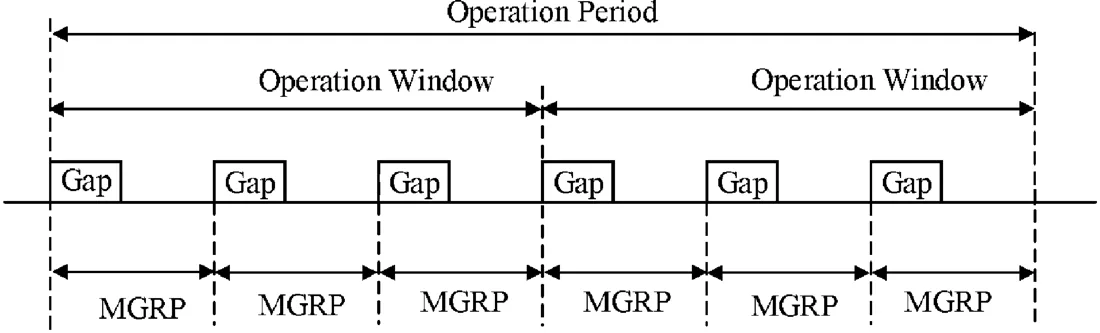
This filing describes how a phone with two SIM cards asks its primary network for specific time windows, or gaps, to check in with a secondary network. During these scheduled breaks, the phone handles tasks for the second SIM while staying connected to the first one. If two gaps overlap, the phone extends the time window to ensure the second network gets its turn.
In the filing’s own words
The disclosure relates to system and method for including configuration for gap for MUSIMs (multi-Universal Subscriber Identity Modules) capable user equipment (UE). In some aspect, the UE comprises at least one antenna, at least one radio coupled to the at least one antenna, and a processor coupled to the at least one radio. The UE supports multi-USIM includes at least a first SIM associated with a first network and a second SIM associated with a second network. The at least one radio and the processor are configured to request, from the first network, a gap configuration associated with an operation in the second network, the gap configuration including a gap during which the operation in the second network is performed by the UE; receive, from the first network, an indication of the gap configuration; and perform, during each gap within an operation period, operation in the second network based on the gap configuration, when the UE is in a Radio Resource Control (RRC) connected state with the first network and is in a RRC idle state or RRC inactive state with the second network, the operation period comprising at least one gap. The processor is further configured to lengthen the operation period if the gap within the operation period is dropped at the UE due to a collision of the gap with other gaps.
What exactly they claim (claim 1)
1. A user equipment (UE), comprising: at least one antenna; at least one radio coupled to the at least one antenna; and a processor coupled to the at least one radio; wherein the UE supports multiple-Universal Subscriber Identity Modules (multi-USIM) including at least a first SIM associated with a first network and a second SIM associated with a second network, and the at least one radio and the processor are configured to: request, from the first network, a gap configuration associated with an operation in the second network, the gap configuration including a gap during which the operation in the second network is performed by the UE; receive, from the first network, an indication of the gap configuration; and perform, during each gap within an operation period, the operation in the second network based on the gap configuration, when the UE is in a Radio Resource Control (RRC) connected state with the first network and is in a RRC idle state or RRC inactive state with the second network, the operation period comprising at least one gap, and the processor is further configured to lengthen the operation period if the gap within the operation period is dropped at the UE due to a collision of the gap with other gaps.
Facts
- Company
- Apple (APPLE INC.)
- Official title
- CONFIGURATION FOR GAP FOR MUSIM CAPABLE UE
- Publication number
- US20260333501A1
- Application number
- 19107726
- Filed
- Sep 23, 2022
- Published
- Oct 22, 2026
- Inventors
- 8
- Claims
- 18
Classified under
H04W 76/27 Electricity & electronicsH04W 36/0058 Electricity & electronicsH04W 36/0072 Electricity & electronicsH04W 36/1443 Electricity & electronicsH04W 76/28 Electricity & electronicsH04W 88/06 Electricity & electronicsMore from Apple in Networks & wireless
- Apple patents interface for sending messages via satellite Sep 29, 2026
- Apple patents way for phones to switch from ground towers to satellites Sep 17, 2026
- Apple patents moving phone plans between devices via Bluetooth Sep 1, 2026
- Apple patents sharing Wi-Fi channel data to speed up device connections Sep 1, 2026
- Apple patents smart surface that helps phones find signal faster Sep 8, 2026
Summaries are simplified from the filing’s own abstract and first claim. A patent filing is not a product announcement.
Patent data and drawings: U.S. Patent and Trademark Office (USPTO). Nebula is not affiliated with or endorsed by the USPTO.