Apple patents virtual effects that follow moving objects in 3D views
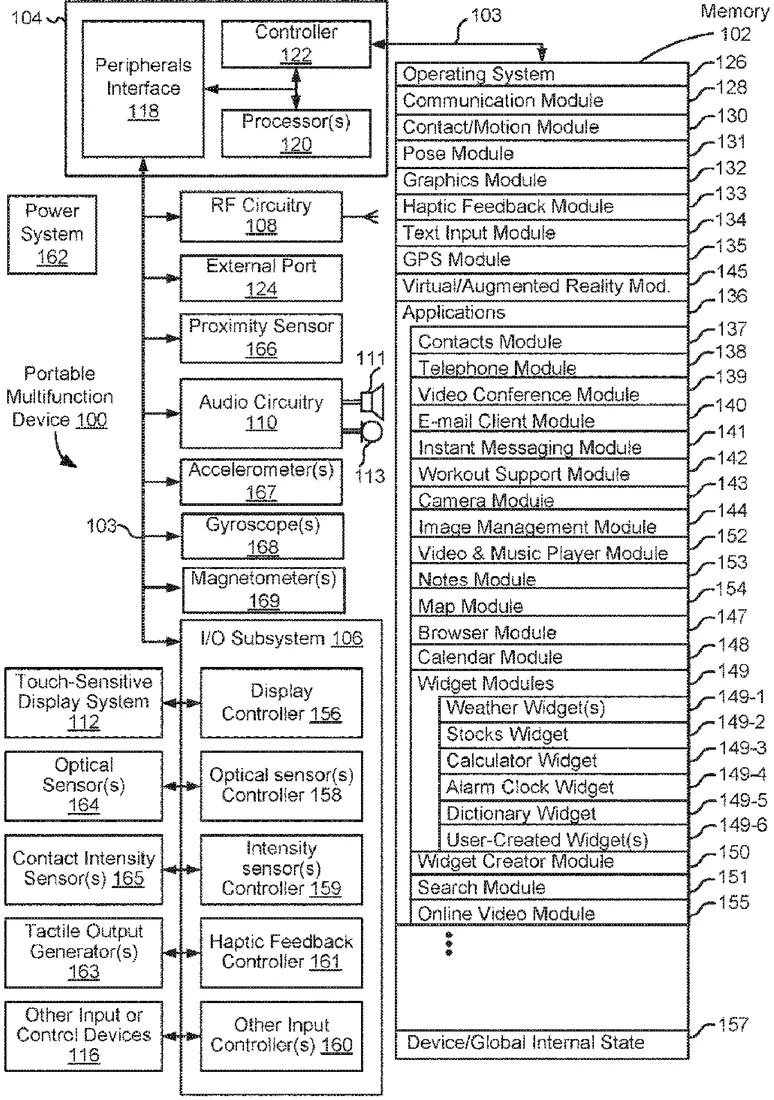
Apple describes a system that adds digital effects to specific parts of a 3D view based on the movement of real-world objects. The effect changes its appearance and position to match how the physical object moves, allowing the same effect to be applied to different objects with unique settings.
In the filing’s own words
A computer system, in response to detecting the occurrence of a first event, applies a first virtual effect to a first portion of a view of a three-dimensional environment with a first set of values for a first set of characteristics of the first virtual effect selected in accordance with tracking of movement of one or more portions of the first physical object in the first portion of the first physical environment. In response to detecting the occurrence of a second event, the computer system applies the first virtual effect to a second portion, different from the first portion, of the view of the three-dimensional environment, with a second set of values, for the first set of characteristics of the first virtual effect selected in accordance with tracking of movement of one or more portions of the second physical object in a second physical environment.
What exactly they claim (claim 1)
1. A method, comprising: at a computer system in communication with a display generation component and one or more cameras: while a view of a three-dimensional environment, including a view of a first physical object that moves in a first portion of a first physical environment, is visible via the display generation component, detecting occurrence of a first event; in response to detecting the occurrence of the first event, applying a first virtual effect to a first portion of the view of the three-dimensional environment with a first set of values for a first set of characteristics of the first virtual effect, wherein the first portion of the three-dimensional environment is proximate to the view of the first physical object in the view of the three-dimensional environment, and wherein the first set of values for the first set of characteristics are selected in accordance with tracking of movement of one or more portions of the first physical object in the first portion of the first physical environment; while applying the first virtual effect to the first portion of the view of the three-dimensional environment with the first set of values for the first set of characteristics of the first virtual effect, detecting occurrence of a second event; and in response to detecting the occurrence of the second event, in accordance with a determination that the occurrence of the second event meets first criteria, applying the first virtual effect to a second portion, different from the first portion, of the view of the three-dimensional environment, with a second set of values, different from the first set of values, for the first set of characteristics of the first virtual effect, wherein the second portion of the three-dimensional environment is proximate to the view of a second physical object in the view of the three-dimensional environment, and wherein the second set of values for the first set of characteristics are selected in accordance with tracking of movement of one or more portions of the second physical object in a second physical environment. The method of claim 1, including: prior to detecting the occurrence of the second event: detecting first movement of the one or more portions of the first physical object in the first portion of the first physical environment; and in response to detecting the first movement of the one or more portions of the first physical object, updating the first virtual effect applied to the first portion of the view of the three-dimensional environment that is proximate to the view of the first physical object, including updating the first set of values of the first set of characteristics of the first virtual effect in accordance with the first movement of the one or more portions of the first physical object in the first portion of the first physical environment; and after detecting the occurrence of the second event: detecting second movement of the one or more portions of the second physical object in the second physical environment; and in response to detecting the second movement of the one or more portions of the second physical object, updating the first virtual effect applied to the second portion of the view of the three-dimensional environment that is proximate to the view of the second physical object, including updating the second set of values of the first set of characteristics of the first virtual effect in accordance with the second movement of the one or more portions of the second physical object in the second physical environment.
Facts
- Company
- Apple (Apple Inc.)
- Official title
- Systems, Methods, and Graphical User Interfaces for Applying Virtual Effects in Three-Dimensional Environments
- Publication number
- US20260330782A1
- Application number
- 19720809
- Filed
- Jun 25, 2026
- Published
- Oct 22, 2026
- Inventors
- 6
- Claims
- 13
Classified under
G06T 19/006 Physics & computingG06T 13/40 Physics & computingG06V 20/44 Physics & computingG06V 40/20 Physics & computingMore from Apple in AR, VR & displays
- Apple patents AR glasses that zoom in on what you look at Sep 8, 2026
- Apple patents finger ring that controls VR with taps and waves Sep 15, 2026
- Apple patents head-mounted device that types via eye swipes and hand pinches Oct 6, 2026
- Apple patents eye-tracking and hand gestures to select screen items Oct 20, 2026
- Apple patents AR glasses that adjust lenses to fit your eyes Sep 17, 2026
Summaries are simplified from the filing’s own abstract and first claim. A patent filing is not a product announcement.
Patent data and drawings: U.S. Patent and Trademark Office (USPTO). Nebula is not affiliated with or endorsed by the USPTO.