Microsoft patents method to fingerprint text messages using image recognition
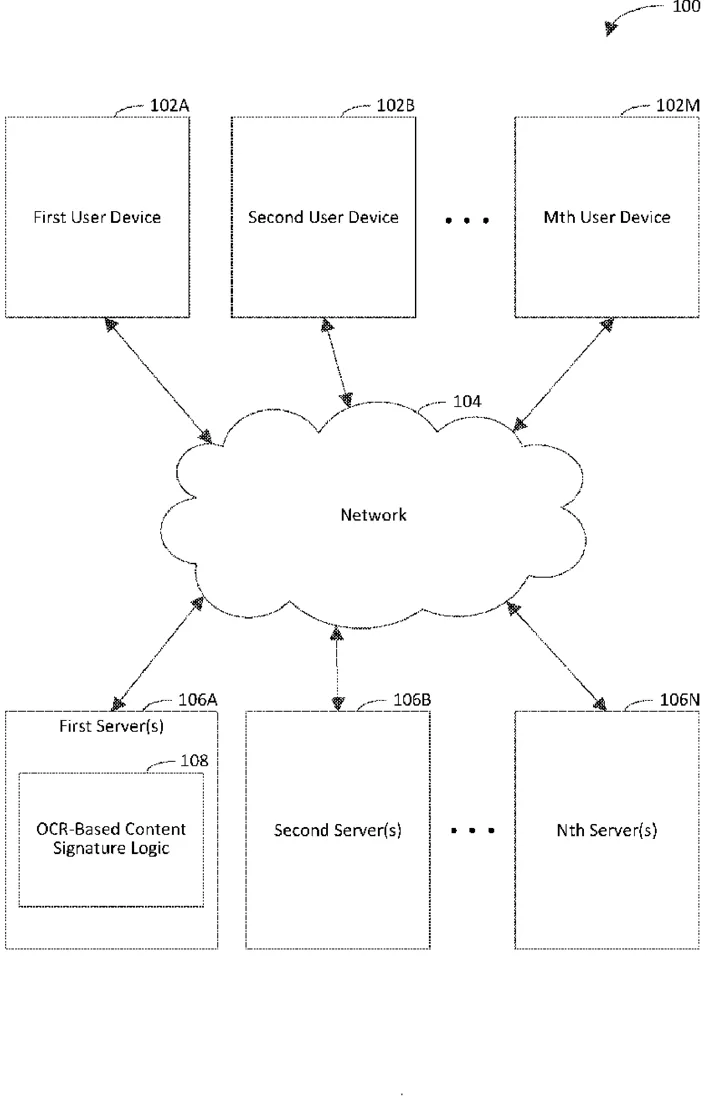
Microsoft describes a system that creates a unique digital fingerprint, or signature, for text messages by first reading them from an image using optical character recognition. The system then strips away personal details, breaks the text into small pieces, and converts these pieces into numbers to generate a stable code that identifies the message content.
In the filing’s own words
Techniques are described herein that are capable of generating a content signature of a textual communication using OCR and text processing. The textual communication is rendered. Text is extracted from the rendered textual communication using OCR. Customization is removed from the text to provide a templatized version of the rendered textual communication that includes de-customized text. The de-customized text is parsed into tokens. Each token includes a respective subset of a plurality of characters. The tokens are converted into respective numbers. Each number is processed using fuzzy hash functions to provide respective hash values associated with the respective token. Representative hash values are selected for the respective fuzzy hash functions by selecting each representative hash value from the hash values that are processed using the respective fuzzy hash function. A content signature of the textual communication is generated by bitwise concatenating at least portions of the respective representative hash values.
What exactly they claim (claim 1)
1. A system comprising: memory; and a processing system coupled to the memory, the processing system configured to: process numerical representations of respective subsets of a plurality of characters in a textual communication using a same plurality of fuzzy hash functions to generate respective pluralities of hash values associated with the respective subsets of the plurality of characters; select representative hash values that are generated using respective fuzzy hash functions, which are included in the same plurality of fuzzy hash functions that are used to process each of the numerical representations of the respective subsets of the plurality of characters, by selecting, for each respective fuzzy hash function, a representative hash value from hash values that are associated with the respective subsets of the plurality of characters and that are generated using the respective fuzzy hash function; and generate a content signature of the textual communication by bitwise concatenating at least portions of the respective representative hash values that are generated using the respective fuzzy hash functions, which are used to process each of the numerical representations of the respective subsets of the plurality of characters.
Facts
- Company
- Microsoft (Microsoft Technology Licensing, LLC)
- Official title
- GENERATING A CONTENT SIGNATURE OF A TEXTUAL COMMUNICATION USING OPTICAL CHARACTER RECOGNITION AND TEXT PROCESSING
- Publication number
- US20260322854A1
- Application number
- 19467565
- Filed
- Feb 2, 2026
- Published
- Oct 15, 2026
- Inventors
- 5
- Claims
- 20
Classified under
H04L 63/1483 Electricity & electronicsG06F 40/205 Physics & computingG06F 40/284 Physics & computingG06V 30/18 Physics & computingMore from Microsoft in Security & privacy
- Microsoft patents system to call 911 for others during video calls Sep 22, 2026
- Microsoft patents system to block fake code suggested by AI Sep 15, 2026
- Microsoft patents one-way data flow to block network attacks Sep 10, 2026
- Microsoft patents voice coding that hides speaker identity for secure calls Sep 17, 2026
- Microsoft patents security checks for AI chats using user and model profiles Oct 1, 2026
Summaries are simplified from the filing’s own abstract and first claim. A patent filing is not a product announcement.
Patent data and drawings: U.S. Patent and Trademark Office (USPTO). Nebula is not affiliated with or endorsed by the USPTO.