Samsung patents image sensor using nanoposts to split light colors
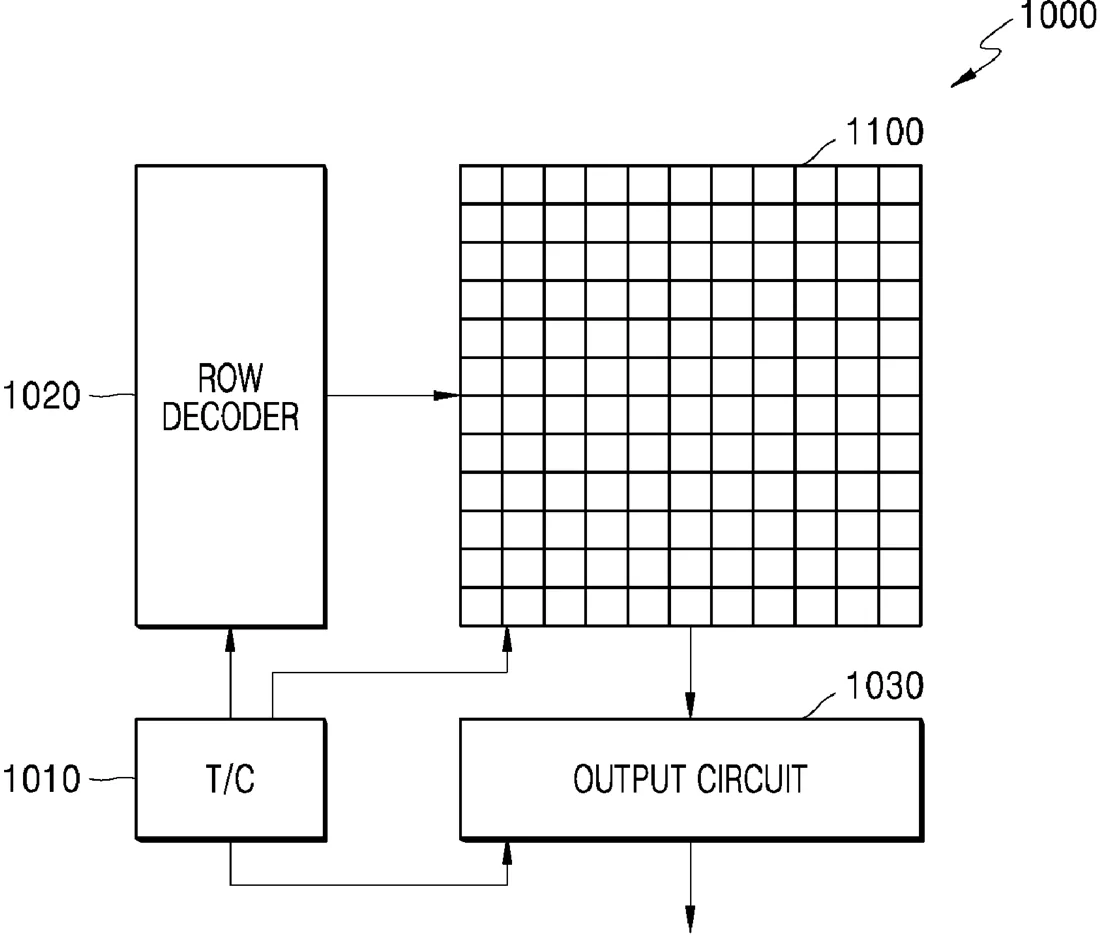
Samsung describes an image sensor that uses a lens array made of tiny nanoposts to separate incoming light into different colors. The design changes the shape and width of these nanoposts depending on their position around the center of the sensor to direct specific wavelengths to the correct pixels.
In the filing’s own words
An image sensor includes a color separating lens array including a plurality of first pixel corresponding regions respectively corresponding to a plurality of first pixels and a plurality of second pixel corresponding regions respectively corresponding to a plurality of second pixels, wherein each of the plurality of first pixel corresponding regions and the plurality of second pixel corresponding regions includes a plurality of nanoposts, and at least one of a shape, a width, and an arrangement of the plurality of nanoposts of the plurality of first pixel corresponding regions changes according to an azimuth direction of the plurality of nanoposts in a peripheral portion surrounding a central portion of the color separating lens array.
What exactly they claim (claim 1)
1. An image sensor comprising: a sensor substrate comprising first pixels, second pixels, third pixels, and fourth pixels; and a color separating lens array comprising first pixel corresponding regions respectively corresponding to the first pixels, second pixel corresponding regions respectively corresponding to the second pixels, third pixel corresponding regions respectively corresponding to the third pixels, and fourth pixel corresponding regions respectively corresponding to the fourth pixels, wherein the first pixel corresponding regions, the second pixel corresponding regions, the third pixel corresponding regions and the fourth pixel corresponding regions are configured to condense light of a first wavelength, in incident light incident on the color separating lens array, onto the first pixels and fourth pixels, condense light of a second wavelength different from the first wavelength in the incident light onto second pixels, and condense light of a third wavelength different from the first wavelength and the second wavelength in the incident light onto the third pixels, wherein each of the first pixel corresponding regions and each of the fourth pixel corresponding regions comprise nanoposts, wherein the nanoposts included in each of the first pixel corresponding regions comprise a first nanopost and a second nanopost provided at different positions in each of the first pixel corresponding regions, wherein widths of the first nanoposts of the first pixel corresponding regions in an area having an azimuth angle of 0 degree or 180 degrees change from a center portion of the color separating lens array to a periphery portion of the color separating lens array, and wherein widths of the first nanoposts of the first pixel corresponding regions in an area having an azimuth angle of 90 degrees or 270 degrees are constant from the center portion of the color separating lens array to the periphery portion of the color separating lens array.
Facts
- Company
- Samsung (SAMSUNG ELECTRONICS CO., LTD.)
- Official title
- IMAGE SENSOR INCLUDING COLOR SEPARATING LENS ARRAY AND ELECTRONIC APPARATUS INCLUDING THE IMAGE SENSOR
- Publication number
- US20260299173A1
- Application number
- 19706072
- Filed
- Jun 12, 2026
- Published
- Oct 1, 2026
- Inventors
- 4
- Claims
- 20
Classified under
G02B 3/0056 Physics & computingG02B 3/0043 Physics & computingH04N 9/64 Electricity & electronicsH04N 23/84 Electricity & electronicsMore from Samsung in Cameras & imaging
- Samsung patents syncing multiple cameras to record one video Sep 1, 2026
- Samsung patents camera system that auto-picks best lens for video Oct 13, 2026
- Samsung patents camera design that bends light to fit in thinner phones Oct 20, 2026
- Samsung patents camera feature that saves video clips around photos Sep 10, 2026
- Samsung patents image sensor that captures depth and bright scenes Sep 24, 2026
Summaries are simplified from the filing’s own abstract and first claim. A patent filing is not a product announcement.
Patent data and drawings: U.S. Patent and Trademark Office (USPTO). Nebula is not affiliated with or endorsed by the USPTO.