Microsoft patents touch screens that move controls to match your position
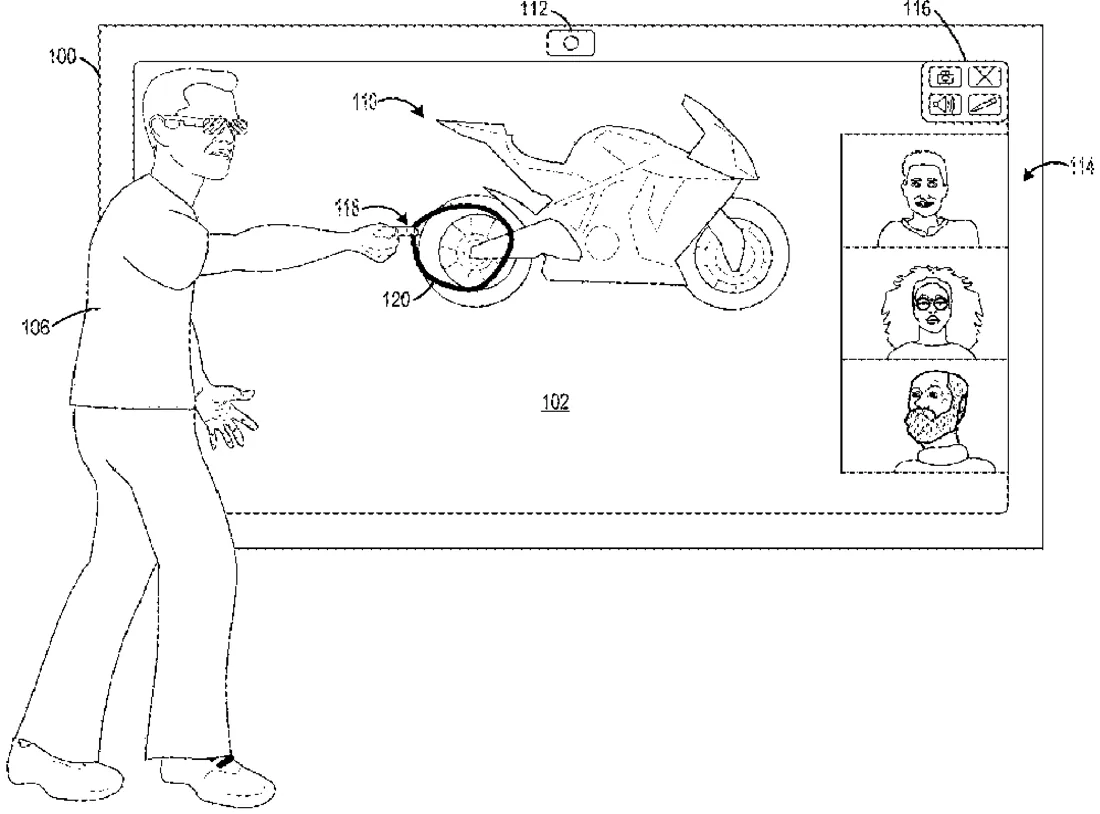
Microsoft describes a system for large touch displays that uses a camera to detect where a person is standing and which way they are facing. The screen then places touch controls in a specific zone directly in front of the user, making it easier to reach and interact with the interface without moving around.
In the filing’s own words
A method of customizing interactive control for a large-format touch-sensitive display device (LFTSDD) is disclosed. One or more images of a scene in front of the LFTSDD are received via a camera of the LFTSDD. The one or more images are computer-analyzed to recognize a human subject in the scene and a location of the human subject relative to the LFTSDD. A variable interaction zone of a display screen of the LFTSDD is determined based at least on the recognized location of the human subject relative to the LFTSDD. The variable interaction zone is smaller than the display screen and positioned a designated distance in front of the human subject on the display screen based at least on the recognized location of the human subject relative to the LFTSDD. A touch control affordance is visually presented in the variable interaction zone of the display screen of the LFTSDD.
What exactly they claim (claim 1)
1. A method for customizing interactive control of a large-format touch-sensitive display device (LFTSDD), the method comprising: receiving, via a camera of the LFTSDD, one or more images of a scene in front of the LFTSDD; computer-analyzing the one or more images to recognize a human subject in the scene and a location of the human subject relative to the LFTSDD including a direction in which the human subject is facing relative to the LFTSDD; determining a variable interaction zone of a display screen of the LFTSDD based at least on the recognized location of the human subject relative to the LFTSDD and the direction in which the human subject is facing relative to the LFTSDD, the variable interaction zone being smaller than the display screen and positioned a designated distance in front of the human subject on the display screen in the direction in which the human subject is facing relative to the LFTSDD based at least on the recognized location of the human subject relative to the LFTSDD and the direction in which the human subject is facing relative to the LFTSDD; and visually presenting a touch control affordance in the variable interaction zone of the display screen of the LFTSDD at a position in the variable interaction zone that is determined based at least on the direction in which the human subject is facing relative to the LFTSDD, wherein the touch control affordance facilitates the human subject providing touch input at the touch control affordance from the recognized location.
Facts
- Company
- Microsoft (Microsoft Technology Licensing, LLC)
- Official title
- Touch-control affordance position customization for a display device
- Patent number
- US12748525B2
- Application number
- 18833995
- Filed
- Mar 18, 2022
- Granted
- Sep 29, 2026
- Inventors
- 3
- Claims
- 14
Classified under
G06F 3/0488 Physics & computingG06F 3/03545 Physics & computingG06F 3/04815 Physics & computingG06T 7/20 Physics & computingG06T 7/70 Physics & computingG06T 2207/20084 Physics & computingMore from Microsoft in Phones & computers
- Microsoft patents meeting view that keeps live text visible when video shrinks Sep 29, 2026
- Microsoft patents browser that suggests actions based on page content Sep 17, 2026
- Microsoft patents tilting phones to flip through app screens like cards Sep 24, 2026
- Microsoft patents touchscreens that tell fingers from water drops Oct 1, 2026
- Microsoft patents video encoding setup for remote desktops Oct 13, 2026
Summaries are simplified from the filing’s own abstract and first claim. A patent filing is not a product announcement.
Patent data and drawings: U.S. Patent and Trademark Office (USPTO). Nebula is not affiliated with or endorsed by the USPTO.